Palo Duro Canyon

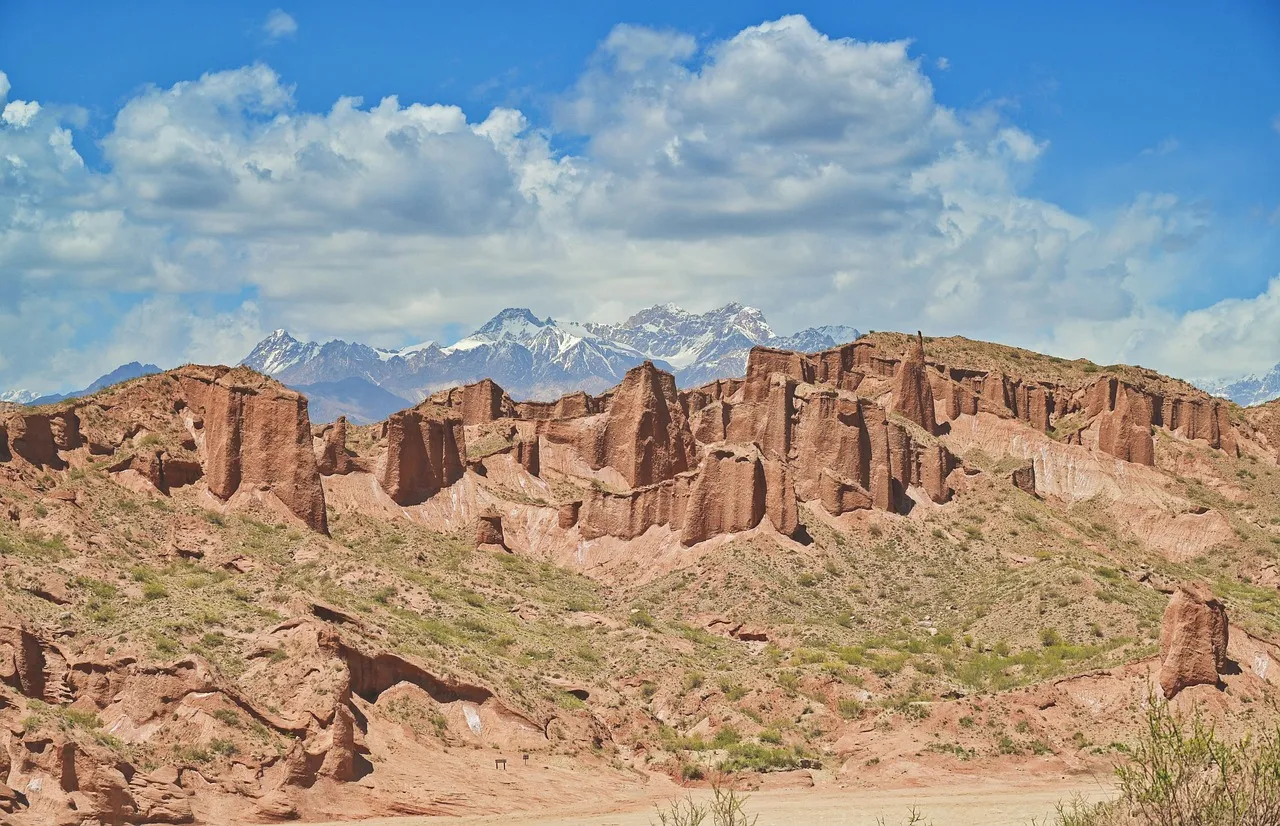
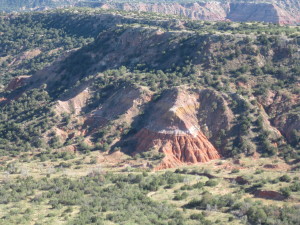
Palo Duro Canyon view from the rim.

Palo Duro Canyon view from the rim.

Palo Duro Canyon got its name when a member of the Coronado expedition in 1541 looked over the edge of the second largest canyon in the North American continent and was most impressed by the scrub mesquite and juniper that grew along the walls.

“Hard Wood” sounds more dramatic in Spanish than in English but it’s a pretty conservative description for a 60 mile long, 4 mile wide, rainbow colored slash in the Texas pan handle.
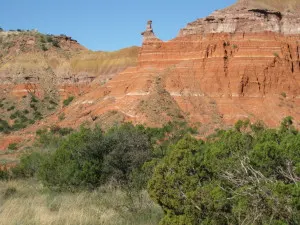


On the Lighthouse trail.

On the Lighthouse trail.

Georgia O’Keefe visited the canyon may times while was a member of the art faculty of the West Texas State Normal College in the little town of Canyon Texas. She described it as “a burning seething cauldron filled with dramatic light and color.” Shortly after arriving she wrote to a friend: “Last night I couldn’t sleep till after 4 in the morning — I had been out to the canyon all afternoon – till late at night – wonderful color – I wish I could tell you how big – and with the night the colors deeper and darker … I’m so glad I’m out here – I can’t tell you how much I like it.”

That sounds more fun than “Hard Wood” doesn’t it?
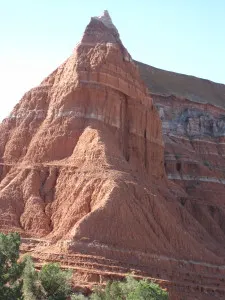
On the lighthouse Trail II.

On the lighthouse Trail II.

In addition to being a place of great beauty, the canyon has historical significance. It is a sacred location to regional Native American tribes and has been continuously occupied for at least 10,000 years.


During the Red River Indian War Palo Duro was a refuge for the Southern Plains tribes until Tonkowa Chief Johnson showed Colonel Ranald S. McKenzie a way into the canyon. The U.S. Army ended the Red River War by killing 1,400 Indian horses. Comanche leader, Quanah Parker escaped with a small band of warriors but he was on foot and without supplies and was unable to carry on his struggle.


After the southern plains tribes were defeated, Charles Goodnight established the JA Ranch in the canyon. It remained in private hands until 1934 when the state of Texas bought it and turned a portion of it into a state park.
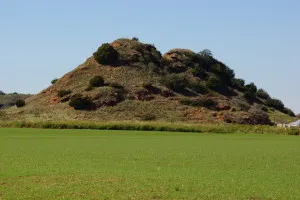
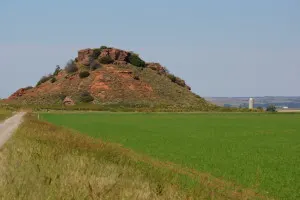
 

Dead Woman Mound, Ghost Mound, Rock Mary


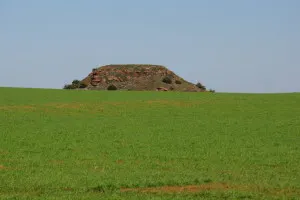
Dead Woman Mound. Caddo Coumty, OK

Dead Woman Mound. Caddo Coumty, OK

Dead Woman Mound, Ghost Mound, and Rock Mary are three natural formations in Caddo County, Oklahoma with names that almost scream “Legend”. All three mounds are natural formations that were used as landmarks during the western migration.

One Dead Woman Mound story—which almost certainly didn’t happen—involved an attack by renegade Indians on a wagon train of settlers. The settlers fought bravely but were hopelessly outnumbered. When it was clear that all was lost, a young woman collected their watches, rings, and money in her apron. She climbed a nearby mound and hid the valuables in a crevice. Many people have searched Dead Woman Mound but no sign of the treasure—or the attack—has ever been found.

Some locals say the mound was named for a mysterious female corpse that was found by a rancher and buried at the base of this 522 meter pile of red dirt and sandstone. Other’s say the mound took its name from nearby Dead Woman Creek, which passes under old Route 66. How Dead Woman Creek got its name is also a bit of a mystery. One I didn’t explore.

If you want to visit Dead Woman Mound put these coordinated in your GPS: Latitude 35.4025, Longitude-98.61306.


Ghost Mound. Caddo County, OK

Ghost Mound. Caddo County, OK

Ghost Mound, as you might imagine, is said to be haunted. The specter is a female ghost who sometimes appears without a head. Ghost Mound may have been the inspiration for an H.P. Lovecraft a novella written around 1930. The famous horror author was a writer for hire in those days and Zelia Bishop paid him to write the story. He portrayed “The Mound” as entryway to a subterranean alien civilization. The novella was never published during his lifetime, but after he died, a radically abridged version of “The Mound” was included in Weird Tales and later in an Arkham House anthology. The 30,000 word original was eventually published in 1989 in The Horror in the Museum and Other Revisions.

If you want to visit Ghost Mound put these coordinates into your GPS: Latitude 35.4025, Longitude-98.50444.


Rock Mary. Caddo County, OK.

Rock Mary. Caddo County, OK.

Rock Mary was a landmark on the old California Trail. A pair of army lieutenants named it after 17 year old—probably very pretty—emigrant, Mary Conway. There is a plaque at the base of the mound and another on the top where the smitten soldiers planted a flag and named the mound in 1849.

Rock Mary is on private property and you can’t visit it without permission. Its coordinates are: Latitude 35.45977, Longitude -98.4259

The Perfect Man

“The Perfect Man” was published on line in Wednesday Night Writes Fall 2013 issue.

Ti Mama Gentry stood beside me on the corner waving at cars and looking sweet. She shook her mercury dime bracelet in my face to ward off the evil eye, just in case. Working girls were careful back in 1995, especially where magic was concerned. We had to be careful about something.

“Rebecca ain’t no kind of name for a sister.”  That’s how Ti Mama liked to start our conversations, sociable but full of attitude, because drama always was a big part of the business. Still is, I guess.

I put my hands on my hips and wobbled my head back and forth like an Egyptian dancer. The two of us made a pretty picture, arguing on the street corner, and when, cars slowed down to get a better look, we turned the volume up.

“Rebecca Sunnybrook’s a fine name for girl like me,” I said.

Ti Mama smiled because I was hardly any kind of girl at all.

You can read “The Perfect Man” free at Wednesday Night Writes website: http://www.wnwlitmag.com

An Inconclusive Girl

“An Inconclusive Girl” was published in Kansas City Voices vol. 11, September 2013.

The ultrasound technician pointed to her nametag instead of introducing herself.

“Sylvia Anoli,” Mona Beaver read aloud. “Choctaw name.”

“Means messenger.” Mona thought the name was perfect for someone who did sonograms. She wanted to talk about it, but the tech’s expression killed the conversation.

“One sonogram’s all the Nation pays for,” Sylvia Anoli crossed her arms and waited for an argument.

“You want another, you have to write a letter.” The tech’s white skin and blond hair didn’t match the Indian name. Lots of white women married Choctaw men in this part of Oklahoma. Most of them looked happier about it than Sylvia. A bad marriage explained everything: the name, the frown, why the technician hated Indians.

You can learn more about Kansas City Voices and order the magazine at the Whispering Prairie Press website: http://www.wppress.org/main/


Is It Art?

Cadillac Ranch

Cadillac Ranch

Ten of General Motors’ finest automobiles were nosed into holes in 1974 on the south side of Interstate 40, just west of Amarillo. Everybody’s heard about them, right?

A regional art group known as the Ant Farm did the actual work, but it was the idea of helium millionare Stanley Marsh 3. (That’s right, he doesn’t like Roman numerals.)

“Art is legalized insanity,” Stanley said. “And I’m very good at it.”

The Cadillac Ranch represents the evolution of the Cadillac tail fin from 1949 to 1963. The cars are canted at the same angle as the Great Pyramid of Giza with their back ends facing due east. That’s symbolism, in case I haven’t made my point.

Passers by are encouraged to enhance the project with graffiti. Total freedom of expression. No forbidden words or phrases. When I stopped by there were no obscenities or political statements, which is more than I can say about Jim Morrison’s grave.

The colors have been formally changed several times. They were painted white for the filming of a television commercial. They were painted pink in honor of Wendy Marsh’s birthday (Stanley 3’s wife in case you’re wondering.). They were painted black to mourn the passing of Doug Michels (Ant Farm artist), and rainbow to celebrate gay pride day. Are there no Amish gay?

The Hampton Inn motel chain once restored the Caddies to their original colors as part of a nationwide Route 66 landmark restoration project. The graffiti reappeared within twenty-four hours.

So is it art?

Well, it feels like art when you get up close, and it has certainly captured the American imagination.

In Pixar’s animated film, Cars, the Cadillac Ranch was depicted as a mountain range.

It feels like art up close.

It feels like art up close.

Hank Hill (King of the Hill) had his father’s Caddie pushed nose first into a hole along with other Cadillacs in the final scene of “Hank Gets Dusted.”

Atomic Tom (a band if you aren’t hip) shot a video at the Cadillac Ranch in 2011.

“Cadillac Ranch” was the name of a song on Bruce Springsteen’s album, The River.

I’m sure there are plenty of etceteras I am leaving out, but you get the idea.

You could argue that the Cadillac Ranch will never stand beside Winged Victory in the Louvre, but I ask you, how would Winged Victory look on the south side of I 40 covered with spray paint?

Since this is my blog post, I get to decide. It’s art. Check it out.