“Girls from Jumbo” in the Fringeworks anthology, CADAVERS

“Girls from Jumbo” was published by Knightwatch Press in the anthology, Cadavers. The book was launched at Southcart Books, 20-

Opening Paragraphs:

 Animal tracks mark the freshly fallen snow around the cabin. Raccoon and possum prints by the trashcan, deer tracks everywhere else – as if a small herd had come around to make sure the hunters were gone.

Michael stands among the trees; he looks for signs of human life. No lights behind the cabin windows, no smoke, no thumps or bumps or human voices. He turns to see what Kenny has to say before he remembers. His only friend is in McAlester. One of those broken-home-visitation things Michael’s dad is always going on about.

Pills make it easy to forget the loneliness. Michael swallowed two, on his walk to the cabin, or was it three? It’s easy to lose count when no one is around to share.  Kenny won’t be back till summertime.

Dad told him, ‘Gone and good riddance,’ earlier this morning.

‘Bad company ruins good morals,’ dad said. ‘Right out of First Corinthians 15:33.’ He’d have said more but he had a meeting with the mayor.

‘May his days be few; may another take his office. Psalms 109:8.’ That’s how Michael’s father summed up politics in Jumbo, Oklahoma.

Cadavers will be available soon along with many other horror genre books on Knightwatch Press’s Amazon page here.


“The Reason” now available in the Fractured Realms anthology.

“The Reason”,  was first published in Glimpses of Insanity, Rainstorm Press, 2012. It has now been published again in  the Horrified Press anthology, Fractured Realms released on June 15, available on Amazon August 21  ALL PROFITS FROM FRACTURED REALMS GOES TO THE AUTISM TRUST.

 “The Reason” opening paragraph:

Things always happen to guys from the Middle East. Religious things—check it out. Jesus, Moses, Mohammed, all those martyrs and apostles. All from the Holy Lands where bushes catch on fire and tell you to take off your shoes and people get swallowed by fish and live to tell about it. You’d think it would be different in Oklahoma City, especially if your name is Joseph Gavin and you were adopted by Irish Baptists who barely even go to church. But no, you’re still from the Middle East, and weird things still happen to you because that’s the way things work whether you like it or not.

All according to God’s plan.

You can learn more about Rainstorm Press or buy Glimpses of Insanity here.


Glimpses of Insanity is also available on Amazon.

Fractured Realms is also available on Amazon.


Oklahoma Ghost Dancers

Wovoka

Wovoka

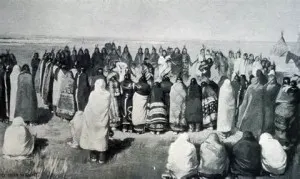
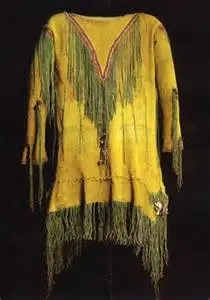
In 1890, the Lakota on the Pine Ridge Reservation were participating in Ghost Dance ceremonies, which according to the Piute Messiah, Wovoka, would turn the world into a Native American utopia. The dancers painted their bodies black and white and danced in a circle all night long. They wore special shirts that were supposed to protect them from bullets. To the U.S. Army it looked like they were preparing for war.

It’s easy to understand the soldiers’ mistake. They expected some kind of reprisal from the Lakota since the government had recently broken their treaty once again. Lakota reservations were reduced to tiny islands in the poorest regions of South Dakota and Nebraska, tribal land was converted into into personal allotments. The Lakota were a warrior culture with several impressive victories over the U.S. Army. It was difficult to believe they

Southern Plains Ghost Dance

Southern Plains Ghost Dance

would be satisfied to dance in circles and wait for God to eliminate the white man. When the disturbance at Wounded Knee was over, about three hundred Lakota were killed, most of them unarmed, many of them women and children.

The Southern (Oklahoma) Cheyenne and their long time allies, the Southern Arapaho heard about the Ghost Dance from their northern relatives and started organizing ceremonies in the summer of 1890 (a few months before the disaster at Wounded Knee). Almost every

Southern Plains Ghost Dance Shirt

Southern Plains Ghost Dance Shirt

camp along the Canadian and Washita Rivers held all night dances two or three times a week.

A Southern Arapaho man named Sitting Bull added a unique feature to the southern plains Ghost Dance. After the ceremony had been underway for several days he stepped into the circle, made hypnotic passes with an eagle feather in front of participants. Hundreds of them went into trances. People who had been in this trance told (through the medium of song) of being transported to a different world.

Newspapers in El Reno, Oklahoma City, and Guthrie terrified white residents with articles warnings of an impending Indian uprising. They called upon the U.S. government send troops to protect defenseless whites. It looked like a military confrontation was eminent, but fortunately the War Department sent Lieutenant H.L. Scott of the 7th Cavalry to assess the danger.


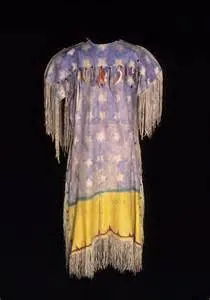
Southern Plains Ghost Dance Dress

Southern Plains Ghost Dance Dress

The lieutenant visited Cheyenne and Arapaho camps from December, 1890 (when the Wounded Knee Massacre took place) through February 1891. He concluded that the Ghost Dance Ceremony was a harmless religious activity and posed no danger to white settlers. If this young soldier hadn’t exercised wisdom and restraint, Oklahoma could have had a Wounded Knee Massacre of its own.

In the spring and summer of 1891, the Southern Cheyenne and Arapaho sent delegations to visit the prophet Wovoka and brought back some “sacred medicine paint” and specific instructions for conducting the ceremony. The dances weren’t held as frequently as before and attendance dropped off, but they were still attracting a large numbers.

In October 1892 they sent another delegation to visit the messiah. Wovoka astounded them by saying he was tired of so many visitors and they should go back home and tell their people to stop dancing. At first the Oklahoma Ghost Dancers refused to believe the message from Wovoka was genuine, but when he refused to correspond with them the ceremony’s popularity declined. A form of the dance was incorporated into the Native American Church and is still performed today as a ceremony of cultural restoration but the tribes no longer expect the white man to disappear or the dead to rise again, or the buffalo to come back in large numbers.

Ghost Dance

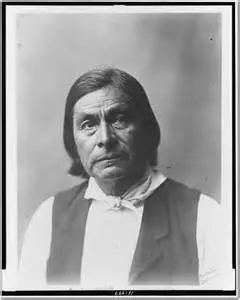
Wovoka (aka Jack Wilson)

Wovoka (aka Jack Wilson)

A Paiute shaman named Wovoka (aka Jack Wilson) came down with a high fever in 1888. While he was delirious, he had a vision that would keep him front and center on the stage of American History for the next few years. His soul was transported to a higher plain, which was the spirit home of all the Indian ancestors of all the tribes that had been killed by the white man. The animals the tribes hunted were there too. The white men were conspicuously absent.

Early in 1899 he had a second revelation during a total
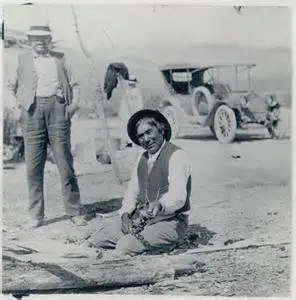
Wovoka

Wovoka

eclipse of the sun. All those dead ancestors and all the animals were coming back. The white man would be swallowed by the earth. God was angry because he had sent his son to bring blessings to the world and the white man had killed him. God planned to give the Indians a fresh start in a Euro-Free planet if Wovoka would teach all the tribes a variation of the traditional Paiute Round Dance. Video available here.

 A Northern Paiute shaman, Wodziwob (Grey Hair) had made similar prophesies in the 1870’s, although he limited the Indian Renaissance to his tribe and didn’t include the Christian
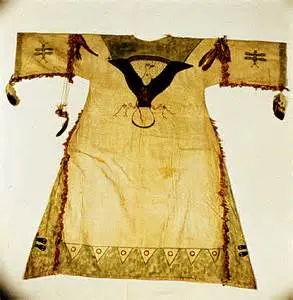
"Bullet Proof" Ghost Dance shirt.

“Bullet Proof” Ghost Dance shirt.

crucifixion element.  Unlike Wodziwob, Wovoka was well acquainted with Christian theology. The Golden Rule was an essential element of his prophesies. He urged his followers to live impeccable lives, refrain from drinking alcohol, and to make no trouble for the white man.

What is truly amazing is how quickly the Ghost Dance religion spread through so many tribes and across so much geography by word of mouth. Wovoka’s prophesy became a pan-Indian movement without him leaving Paiute lands even once.
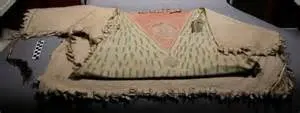
Ghost Dance Shirt

Ghost Dance Shirt

Like most large scale religious movements, believers modified the details to suit their purposes. The Lakota added a militaristic element. They can hardly be blamed for that. Their messianic leader, Crazy Horse, had been bayonetted by a military guard while resisting arrest in 1877. They were forcibly held on reservations and were dependent on rations from the U.S. government that came irregularly when they came at all.
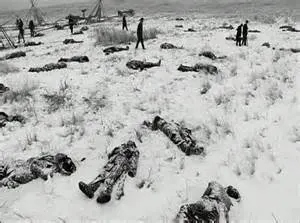
Aftermath of Wounded Knee Massacre.

Aftermath of Wounded Knee Massacre.

Hundreds of Lakota gathered on South Dakota Reservations to try and dance the white man away. They wore what appeared to be war paint, and “bullet proof” Ghost Shirts while they danced all night in circles. The white population including the local Indian Agent were certain there would be an uprising and asked the Army to suppress it.

 The order went out to arrest Chief Sitting Bull at the Standing Rock Reservation. He was killed in the attempt on
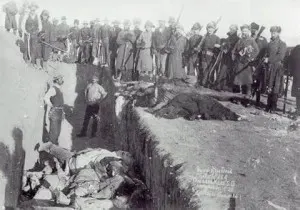
Mass Grave for Lakota  massacred at Wounded Knee

Mass Grave for Lakota massacred at Wounded Knee

December 15, 1890.

When Chief Big Foot heard of Sitting Bull’s death, he tried to head off disaster by seeking protection at the Pine Ridge Reservation. The army intercepted his band on December 28 and brought them to the edge of the Wounded Knee to camp, where things quickly went wrong.

During the process of disarming the Lakota (according to one version of events), a deaf tribesman named Black Coyote refused to give up his rifle. A scuffle escalated and a shot was fired which resulted in the
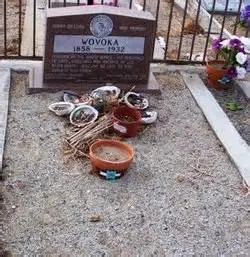
Wovoka's grave

Wovoka’s grave

7th Cavalry’s opening fire indiscriminately from all sides. The Lakota warriors who still had weapons began shooting back at the attacking soldiers, who quickly suppressed their fire. The surviving Lakota fled, but U.S. cavalrymen hunted them down. When the smoke cleared and the shooting stopped, approximately 300 Sioux were dead.

The Southern Cheyenne continued Ghost Dances in Oklahoma until Wovoka himself sent word that they should stop. He told a delegation he was tired of so many visitors and they should return home and tell their people to stop dancing. Wovoka (aka Jack Wilson) died in 1932 and was buried on Paiute land. People still leave flowers on his grave.

Mysticism is an important element of any story that deals with Native America, whether those stories happened a hundred years ago, or yesterday, or even a hundred years in the future. In my fiction that mysticism takes the form of Magic Realism. If you are interested in seeing my approach to Magic Realism, check out my free short story collection Southwest Gothic Tales, my Kindle single, “Messages”, and my first novel, Owl Dreams. My second novel, Magic Popsicle Sticks, is in the capable hands of Pen-L Publishing, and will be available later this year.
The Crazy Snake Rebellion


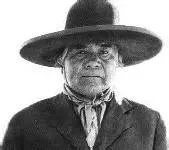
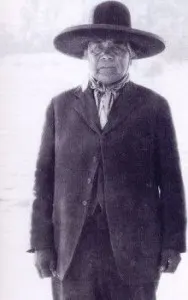
Chitto Harjo

Chitto Harjo

In 1906 an eloquent Native American orator embarrassed the U.S. Senate by pointing out the ephemeral nature of Indian treaties: “This was the first agreement that we had with the white man. He said as long as the sun rises it shall last; as long as the waters run it shall last; as long as the grass grows it shall last.”

What a fantastic quote. It sounds like something Chief Dan George might have said in Little Big Man—classical Plains Indian Dialogue right? Even though Chief Dan George was Coastal Salish from B.C. Canada.

 The speaker was an Oklahoma Creek named Bill Harjo. He was better known in those days by his traditional name, Chitto Harjo—Crazy Snake (actually Snake Crazy, since Creek sentence structure is similar to Spanish). Harjo literally means recklessly brave,

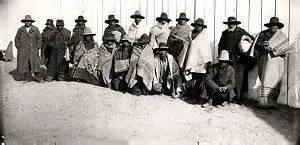
Members of the Crazy Snake Rebellion

Members of the Crazy Snake Rebellion

but who wants a Native American folk hero named Recklessly Brave Snake?

Chitto Harjo failed to convince the U.S. Senate to respect the treaty of 1832. This agreement guaranteed the Creek (and other tribes) specified lands in Oklahoma after they were forcibly removed from their ancestral homes. Oklahoma was about to become a state, and the Wounded Knee massacre (1890, one year after South Dakota Statehood) was still fresh in

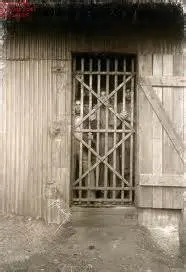
Jailed  "Snakes"

Jailed “Snakes”

everybody’s minds. President Teddy Roosevelt had no intention of bringing another state into the union that had independent tribal governments within its borders.

The Dawes Act created tribal roles and divided Indian land into allotments. This law had been around since 1887, but the tribes of Oklahoma, especially the Creek faction under Chitto Harjo’s leadership, had successfully resisted its implementation for years. Their legal recourse ended in 1898 when congress passed the Curtis Act that eliminated tribal governments.

Harjo was arrested in 1901 along with ninety-five of his supporters. They were sentenced in federal court to two years in Leavenworth but the sentences were immediately suspended on their promise to stop their anti-government activities. Most of the “Snakes” did stop but Harjo kept organizing opposition to allotment. He eluded arrest for ten months, but deputy marshals captured him in the spring of 1902. He and nine others were imprisoned at the Leavenworth federal penitentiary where they served their two-year sentences.

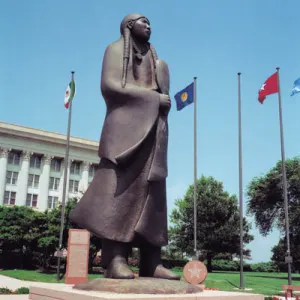
while the water flows Hauser sculpture, OK state capitol.

while the water flows
Hauser sculpture, OK state capitol.

In March of 1909, three years after Harjo’s speech to the U.S. Senate, a large number of “Snakes” gathered at the Hickory Ground Green Corn Ceremony. Much to the displeasure of white citizens, the Creek allowed many displaced Black families from Henryetta to set up a tent camp near the town. Unemployed and landless, the families resorted to stealing meat from white owned smokehouses to feed themselves.

An armed posse from Henryetta rode to the tent camp and killed several Black men. Harjo was not present at the camp, but he was held responsible for what came to be known alternately as the Smoked Meat Rebellion or the Crazy Snake Rebellion.

Four Deputies came to Harjo’s home to arrest him on March 27, 1909. Shots were fired. Two of the Deputies were killed and Crazy Snake took a bullet in the hip. A larger posse returned to Harjo’s home to find him gone. Vigilante groups roamed the vicinity pillaging Snake farms in search of him. Oklahoma Governor George Haskell called out the First Regiment of the Oklahoma National Guard to restore order.

In spite of an intensive search, Chitto Harjo was never found. It is widely believed he died of his gunshot wound and was buried in a secret location by his Choctaw friend, Daniel Bob, but rumors persisted for years that he had fled to Mexico with a number of his followers.

Cultures have been colliding in Oklahoma since long before statehood and they haven’t stopped in recent years. We mostly settle our differences peacefully these days, at least on a geopolitical scale, but those differences still exist and they provide excellent fuel for fiction. I believe Owl Dreams, and my soon to be released novel, Magic Popsicle Sticks illustrate our differences and similarities clearly. We are a real melting pot in Oklahoma; We should expect a few lumps in the gravy.