Oklahoma’s Oldest Ghost Town

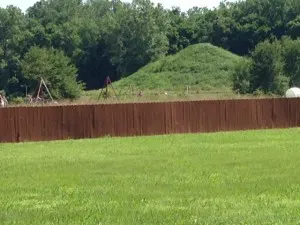
"Craig Mound" at the Spiro Mounds Archeological Center

“Craig Mound” at the Spiro Mounds Archeological Center

Oklahoma has only been a state since 1907, but people have been living here a lot longer than that. There’s a quiet little spot by the Arkansas River just outside of Spiro where Native Americans lived for 8,000 continuous years. About 1,200 years ago they built a city that included earthworks mounds and a plaza laid out to match solar astronomical events (solstices and equinoxes). The people who built that city were part of a Mississippian culture that included similar settlements along all the major rivers of the south-eastern and mid-western continent. The Mississippians established religious, political, and economic ties from the
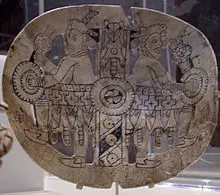
Incised Conch with central striped cedar pole / Spiro Mounds

Incised Conch with central striped cedar pole / Spiro Mounds

Gulf of California to the Gulf of Mexico.

The Spiro mounds city—and the entire Mississippian culture—thrived from 900 to 1300 A.D. Then it went into a steep decline. The city was abandoned by 1450, less than a half century before Columbus changed everything in this part of the world forever. The most probable reason for the Mississippian collapse was global climate change associated with the “Little Ice Age”.

A centuries long drought made the Mississippians’ corn based culture untenable and the population dispersed. A few holy men continued to maintain the city as a burial site and religious center for another 150 years.
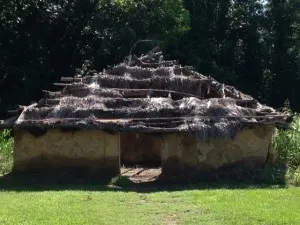
 

Spiro Mounds Dwelling

Spiro Mounds Dwelling

While the Mississippian culture flourished, Sun Kings lived on top of platform mounds, higher than any other citizens. They were religious as well as a political leaders with direct connections to the supernatural. When a Sun King died, his wife and servants were strangled. Their bones were cleaned and buried along with elaborate grave goods. In the Spiro mounds city, the bones were put into a central burial chamber inside “Craig Mound”.
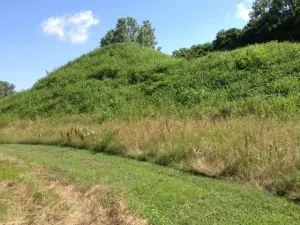
Craig Mound / The Great Mortuary

Craig Mound / The Great Mortuary

Over 600 complete and partial burials have been found in Craig Mound. It is the only Mississippian mound with a central chamber. Archeologists call it “The Great Mortuary”.

In 1933 a group of commercial diggers who called themselves the Pocola Mining Company acquired a lease for the Craig Mound. From 1933 until 1935 Pocola employees dug haphazardly into the burial mound, using earth moving equipment and even dynamite. The commercial diggers destroyed about one-third of the mound and sold thousands of artifacts, made of stone, copper, shell, basketry, and fabric, to collectors throughout the world.
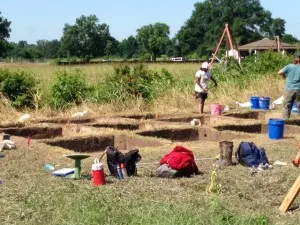
Excavation at Spiro Mounds

Excavation at Spiro Mounds

In 1935, the Oklahoma Legislature passed a licensing requirement to protect the site and the Pocola Mining Company was shut down. OU archeologists began careful, methodical excavations a year later with the help of WPA laborers. This continued until 1941 with the beginning of U.S. involvement in WWII.

Today, the Spiro mounds site is owned and operated by the Oklahoma Historical Society. It is open to the public and special tours are conducted during solstices and equinoxes.
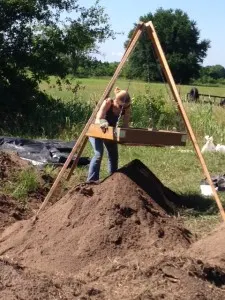
Sifting for artifacts at Spiro Mounds

Sifting for artifacts at Spiro Mounds

The mounds are not currently being excavated but archeologists are still exploring the site with non-invasive techniques as well as excavations.

Many anthropologists believe the early ancestors of the Muskogee speaking tribes, Choctaw, Chickasaw, Creek, and Seminole were part of the Mississippian culture. About 1,700 years ago, the Hopewell People—ancestors of the Choctaw—built the great earthwork mound, Nanih Wayah, which is still sacred to the tribe today.

When the Muskogean “Civilized Tribes” were forced-marched from their southeastern tribal lands to Indian Territory, they were actually being sent to the ancient religious center of their ancestors’ culture. The magic had waited patiently for them for 400 years.

Coincidences like this is one reason I think Oklahoma is the best place in the world for a fiction writer to live.

My first book, Owl Dreams, is a magic realism novel based loosely on Native American mysticism.My new novel Magic Popsicle Sticks also has a contemporary Native American Mystical theme and will be released from Pen-L Publishing soon. If you visit the Spiro Mounds Archeological Center, you’ll see where the magic all started.
“Officer Laura Pepper”

“Officer Laura Pepper” was published in the Storyteller vol. 9, issue 2 (April, May, June) 2014.

Opening Paragraphs:

 “Haven’t I been here before?”  The policewoman at Jack’s front door looked at him for a couple of seconds then shifted her gaze to the foyer behind him.

Something about the lady cop definitely looked familiar. It could have been the way she held her mouth—like she tasted something spoiled. Every female cop Jack had ever seen held her mouth like that, and he’d seen a lot of them in the last couple of years. It didn’t mean this one had anything personal against him, so Jack told her why he’d called.

“It was about two o’clock in the morning,” he said. “A truck pulled into the driveway and the driver tossed a rock through my living room window.”

“I’m pretty sure I’ve been here before?” She pushed the front door wider and eased herself into the foyer, shoving him aside with her bottom.

You can check out the Storyteller or order back issues here.

Ghost Writers?

Ghosts got a lot of attention in the U.S. from the end of the 19th through the first half of the 20th centuries. Seven hundred thousand men died in the Civil War, one hundred

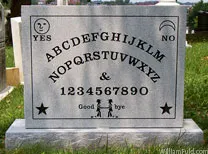
Elijah Bond's Ouija Board Head stone

Elijah Bond’s Ouija Board Head stone

seventeen thousand Americans (out of 37,000,000 total casualties) died in WWI, and just when things were looking up, along came WWII. That one killed off 2.5% of the world’s population, including 420,000 Americans. Practically everybody had sons and nephews, fathers and uncles who were prematurely sent to the other side, and people wanted to stay in touch.

My mother’s family got its start in Spiritualism when my Great Grandmother visited France as part of the post WWI Gold Star Mother’s program. She bought flowers to put on her son’s grave but there were millions of war casualties and they’d been buried under

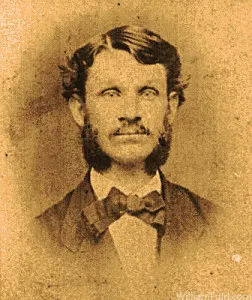
Elijah Bond

Elijah Bond, inventor of the Ouija Board

numbers in a disorganized field. She narrowed the graves down to two choices and divided her flowers between them. When she got back home she attended a séance and asked if she got it right. She had, according to her medium, and the other dead soldier appreciated the flowers too.

In the early days of American Spiritualism, ghosts communicated with knocks and bumps. It was extremely time consuming, especially when professional mediums weren’t around. To make things easier, Baltimore attorney and inventor Elijah Bond patented the Ouija Board. He “borrowed” the idea from a Chinese prototype developed in the 12th century.

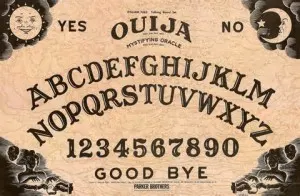
Bond named his board by combining the French and German words for yes, Oui-Ja. The device was a flat rectangle marked with the letters of the alphabet, the numbers 0–9,

Ouija Board

Ouija Board

the words “yes”, “no”, “hello” (occasionally), and “goodbye”, along with various symbols and graphics. It came with a heart shaped planchette that would be guided by the spirits to spell out messages one letter at a time. Eventually Hasbro acquired all patent and trademark rights. About ten boards are sold today under various names.

The board’s popularity has faded in the 21st century, but it was widely use not so long ago.

In 1913, a St. Louis housewife, Pearl Curan, was introduced to the Ouija Board by her friend Emily Grant Hutchings. At one of their frequent afternoon séances, the Ghost of Patience Worth (who lived in Dorsetshire England in either 1649 or 1694) spelled out, “Many moons ago I lived. Again I come. Patience Worth is my name.” The message is

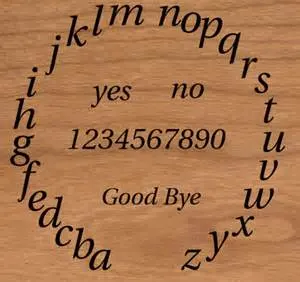
Ouija Board with circular alphabet

Ouija Board with circular alphabet

pretty typical of Ouija Board , experiences, but Patience went on to channel seven books, voluminous poetry, short stories, and plays. Her works are virtually forgotten today, but the prestigious Braithwaite anthology listed five of her poems among the nation’s best published in 1917, and the New York Times hailed her first novel as a “feat of literary composition.”

Pearl Curan’s friend, Emily Hutchings went her one better. She wrote Jap Herron: A Novel Written from the Ouija Board while the recently deceased Mark Twain dictated it using one of Elijah Bond’s Spirit Boards. The book received less than favorable reviews and was denounced by Samuel Clemens surviving daughter, Clara. Harper and Brothers publishing company, which had sole rights to publish Mark Twain’s works, sued to halt publication. Rather than face a court battle Ms. Hutchings and her publisher decided to stop distribution.

In 1982, James Merrill released a 560 page epic poem entitled The Changing Light at Sandover. According to Merrill, his book was written using a Ouija Board. It received the

Just Sayin'

Just Sayin’

National Book Critic’s Circle Award. Some of the poetry in Changing Light at Sandover had been previously published as part of a collection, Divine Comedies, which won the Pulitzer Prize for poetry. Not bad for a ghost written book.

Ouija Boards have turned up in the news as recently as 1994. A convicted Murderer, Stephen Young, was granted a retrial after it was learned that four of his jurors had conducted a Ouija board séance and had “contacted” the murdered man, who confirmed Young was his killer. No literary connection here, but this would make an interesting detail in a novel.

I’ve written three novels so far—one published and two on the way—and numerous short stories. I admit to having my share of writers block on each and every one. The next time that happens to me, I think I’ll dust off the old Ouija Board and see if Earnest Hemingway has any advice.

If you’ve been meaning to buy a hard copy of Owl Dreams but haven’t gotten around to it, my publisher is running a 20% off sale for the remainder of this month on all their books. Or, spirits willing, you can pick up a Kindle copy on Amazon.

Spiritualists–Quirky but not Scary

Bodies are buried in the floors and walls of the old churches

Bodies are buried in the floors and walls of the old churches

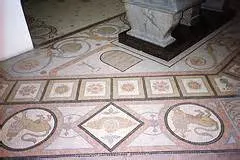
Spiritualist services are quirky—no doubt about that—but they are nowhere near as macabre as the old churches in Europe. If you are fortunate enough to visit Westminster Abby or St. Paul’s Cathedral in London, you will find there are bodies buried in the walls and floors. You have to walk around elaborate marble sarcophaguses, and the cellars are crypts.

There’s no doubt what the old churches were all about—survival after death. There’s no doubt about the Spiritualists’

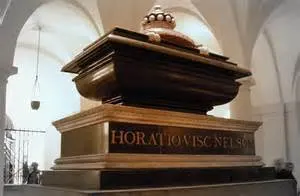
Sarcophagus in St. Paul's Cathedral

Sarcophagus in St. Paul’s Cathedral

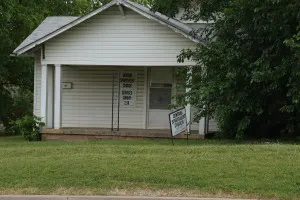
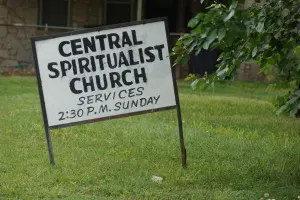
theme either. No bodies are buried in the walls and floor of the old frame house that serves as the Central Spiritualist Church of Oklahoma City but the pastor wore a beaded necklace fashioned from funeral programs—and of course she talked to ghosts.

About ten people usually show up for a service, but last Sunday there were four. Not much of an audience but the spirits didn’t seem to mind. One ghost reminded an attendee of sharing a meal of polk salad. Another congregant was having car trouble and her spirit guide told her where to find a good mechanic. One lady was alerted to a problem in her grand th-3daughter’s chest. “Difficulty breathing, I think,” the pastor said. “It’s not anything serious but keep her in your prayers.”

It turns out there are spirit doctors and nurses who help us when we are sick. I guess there are spirit nutritionists and mechanics too—why not?

There were only four of us so the pastor couldn’t really leave me out. She looked at me for a moment and mentioned a name. “Do you know her? I don’t believe she’s in spirit.” I recognized the name immediately. She’s still very much alive so I’ll respect her privacy.


The Central Spiritualist Church of Oklahoma City

The Central Spiritualist Church of Oklahoma City

The thing about spontaneous messages from beyond the grave is: none of them are really all that spontaneous. The pastor says a name, or sometimes only a letter in a name, followed by a who, what, when, and where information exchange.  Then comes the message from the “other side.” Usually it’s something general, but this voice had some very specific things to say.

“This spirit feels like her mother or her grandmother. Your friend has suffered a loss and needs to know she’s loved.” The pastor kept her eyes closed through the first part of the message but now she opened them. “Tell her you care. Don’t forget about her and . . . This mother presence thinks she should get a dog.”

The mother spirit didn’t specify a breed but she thought an older dog might work out best. “One that’s not so full of energy.” A member of the Spirit ASPCA? I leave it up to you.

I promised I’d pass the word along.

The future of the Central Spiritualist Church of Oklahoma City is in question, because the pastor will be retiring soon. If you are interested in seeing what a spiritualist service is like, you can attend at 2:30 p.m. on the first and third Sundays of the month, at least through July. The address is 36th St.

This has nothing to do with spiritualism, but I want to mention that My Publisher is offering OWL DREAMS this month at 20% off.


Spiritualism—origins and experiments

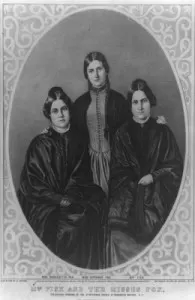
Margaret, Kate and Leah Fox

Margaret, Kate and Leah Fox

Things have always gone bump in the night, and when that happens, people usually give a passing thought to the supernatural. Spirits are nothing new. They are found in the oral histories of every culture, in the scary stories children tell during sleepovers, even in the plays of William Shakespeare.

Ghosts (real or imaginary) have always been with us, but the Spiritualist Church got its start in Hydesville, NY on March 31, 1848 when Margaret and Kate Fox (ages 15 and 11 respectively) used “rappings” to convince their much older sister Leah that they were communicating with the spirit of a murdered peddler whose body was hidden in the cellar of the family’s recently acquired home.

There were already rumors the house was haunted. People heard groans, bumps, and even the sounds of furniture being moved. Those sounds might have been attributed to

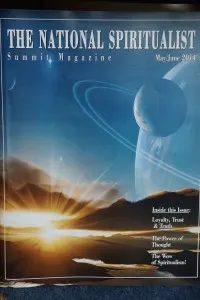
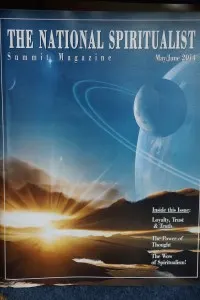
The National Spiritualist Summit Magazine

The National Spiritualist Summit Magazine

settling noises that are common in old houses but when the Fox sisters asked questions, the noises answered—one “rap” for yes and two for no. After an elaborate game of twenty questions, the girls had the foundations of a new religion all laid out.

 A lot of religious movements took root in western New York in the early and mid 19th century. These included:

  • The Later Day Saints Movement. In claimed he was led by an angel to a hill near his home in Manchester, NY where he found the golden plates that were his source for the Book of Mormon.
  • The Millerites. William Miller founded a church based on a vision of the end of the word that would take place on October 22, 1844. That obviously didn’t happen, but many of Miller’s concepts are still held by adherents of Adventism.
  • The Shakers were very active in that area, and established their first communal farm in central NY.
  • The Oneida Society established a temporary community in the region. They had a unique interpretation of group marriage with mates chosen by committee and children raised in common.

The Fox family was good friends with a radical Quaker couple who helped spread their fame through their religious community. You might be asking yourself, what constituted a radical in the 1840’s? These Quaker extremists believed in abolition of slavery, equal rights for women, and temperance.

th-1Before long, the Margaret and Kate Fox were the central focus of the Spiritualist Church in America and Great Britain. Their sister Leah spent much of her life managing their careers. The sisters had many notable supporters including: James Fenimore Cooper, Sojourner Truth, Horace Greeley, William Cullen Bryant, George Bancroft, and William Lloyd Garrison. They could have probably maintained a socially respectable following if they hadn’t developed serious drinking problems.

As their alcohol dependency grew worse, Kate and Margaret quarreled with their older sister (and business manager) Leah. They denounced her and confessed that Spiritualism

seance

seance

was a fraud. In 1888, before an audience of 2,000, Margaret showed how she produced “rapping” by popping her toes. She told the crowd, “I am here tonight as one of the founders of Spiritualism to denounce it as an absolute falsehood from beginning to end, as the flimsiest of superstitions, the most wicked blasphemy known to the world.”

A year later she—and her sister Kate—retracted their denouncement and tried to resume their careers. They never regained popularity and died penniless five years later.

The Spiritualist Church did not share the Fox sisters’ demise. It gained popularity in the U.S. after the Civil War and expanded even more in the U.S. and in the UK after WWI. Mary Todd Lincoln conducted séances in the White House. Alfred Conan Doyle (physician and author) joined the Ghost Club (Charles Dickens had been a member before him) and promoted Christian spiritualism.


Site of the Fox Sister's Cabin

Site of the Fox Sister’s Cabin

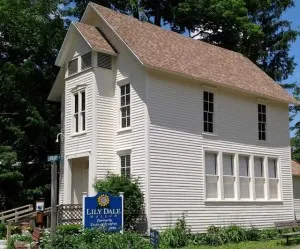
The town of Lily Dale, NY became renowned as a center for American Spiritualism when it purchased Margaret and Kate Fox’s house in 1927 and moved it into the town. The building is gone, but the site is now maintained as a small clearing in the woods where devotees can go to meditate.

Here’s an interesting bit of information for skeptics to consider. In 1904 (long after Margaret and Kate were “in spirit”) a false wall collapsed in the cellar of the Fox’s old home and revealed a man’s skeleton. A peddler’s tin box was also found. Here were two bits of physical evidence supporting the

Peddler's Box from the Fox's house

Peddler’s Box from the Fox’s house

validity of the sisters’ first séance. That box is on display in the Lily Dale Museum, but it isn’t clear what happened to the bones.

Skeptics and devotees of Spiritualism have continued to search for proof or refutation of communication with the dead.

In 1921, Thomas Lynn Bradford of Detroit, Michigan decided the only way to settle the controversy was to commit suicide and communicate an undeniable message through a medium. Unfortunately, the message was not all that undeniable. He told his co-investigator, Ruth Doran, “I am the professor who speaks to you from the Beyond. I have broken through the veil. The help of the living has greatly assisted me.” He had more to say but nothing specific enough to satisfy a non-believer.

Museum2014-640x532Harry Houdini was a famous spiritualist skeptic of his day. He promised to pass on a very specific message to his wife, Bess, from beyond the grave if such a thing was possible. The message was short, sweet, and specific: “Rosabelle Believe”. After ten years of consulting mediums and attending séances, Bess finally gave up.

By the way, Houdini died on Halloween, in 1926—coincidence?


Spiritualist Church / Visit 2 (A Message)

DSC01737On my second meeting at the Central Spiritualist Church, I received a message from a dead relative. In my typical skeptical—some might say devious—manner, I had laid the groundwork. I told the pastor my mother’s name. I expected to hear that name recited back to me, or at least hinted at when the spiritual communication part of the service rolled around. It didn’t go that way.

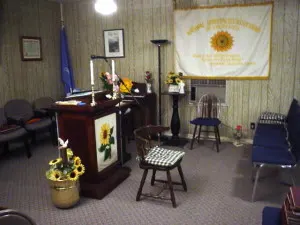
The atmosphere inside the little frame house didn’t change from the first meeting to the second. The congregation did. There were some repeat attendees, but most of the

Inside the Central Spiritualist Church of Oklahoma City

Inside the Central Spiritualist Church of Oklahoma City

people there were new to me. The minister, Juanita Oyer, knew most of them by name. It was a small group, ten mostly middle aged people, eight women and two men including me.

For a religion based on ghosts, the church is not a scary place. The religion is based on nine principals, two of which set it apart from more orthodox Christian churches: (4) We affirm that the existence and personal identity of the individual continue after the change called death, (5) We affirm that communication with the so-called dead is a fact, scientifically proven by the phenomena of Spiritualism.

The purpose of the “contact” portion of the service is to provide evidence that our departed loved ones survive “in spirit.” This evidence comes in the second half of the DSC01745service, when the pastor delivers messages from the other side.

Juanita Oyer makes firm eye contact with one person after another while she says something like, “I have someone here in a long black dress. I think her name begins with the letter L.” If she sees a spark of recognition she pursues the connection: “Something in your life is about to change—a career, money—something involving your name written on a contract . . .” She follows a line of thought until it runs dry and then she, “lets this spirit go.”

Many of the “spirits” in the room are repeat guests. “Genevieve is back again.”  Many of them attended the church in its salad days. They drop in with advice for continuing members who knew them in life. Most of the spirit visitors, like most members of the congregation are women.

The pastor looked at me several times during the communication part of the service IMG_0057but she never made a connection. She had fallen on her way to church, and wasn’t strong enough to maintain contact.

“I’ll have to stop right now,” she said. “Susan, would you like to try and bring someone through?”

In the early part of the service, we introduced ourselves. I didn’t remember anyone’s name (as usual), but Susan did. She sat in a chair in front of the congregation and had a message for everybody the pastor had missed. She had a different style. More direct, more specific,

Indian Spirit Guide

Indian Spirit Guide

more like Patrick Jane on The Mentalist.

One woman in the front row had a message from an unnamed spirit who wanted to tell her, “something about a man.”

“Does that sound right?” Susan asked.

It did.

“This might be one of your spirit guides,” Susan told her. “She has five words for you: Kick him to the curb.”

Susan asked my permission to focus on a spirit who was there for me.

“I think this is an aunt,” she said. “Someone who was important when you were a child.”

I only had one aunt. I know that sounds strange but my extended family was badly broken. She made reference to my lonely childhood. That was partially true. I had friends but no siblings.

She said, “Your aunt wants you to connect with more people.” I’m presuming she meant people who are still alive. My dead aunt had me pegged as an introvert. Not the kind of message I found convincing but it was a start.

th-1Susan continued: “You have a Native American spirit guide.”

According to spiritualists we all have spirits who stay close to us. They give us premonitions, keep us safe, whisper advice in our ears. Differences in language don’t seem to be a barrier. For some reason many of the spirit guides are Indians. Susan told me mine wore a feathered headdress—most Indian spirit guides apparently do that—and he was, “a giant of a man.”

I was intrigued if not convinced. I write fiction loaded with Native American mysticism. Maybe my muse is a giant Plains Indian Ghost.

My paranormal fiction-writing friends are missing out by not visiting the Central Spiritualist Church of Oklahoma City. It’s likely to be closing soon. Juanita Oyer is retiring and according to her, “Oklahoma hasn’t been very fertile ground for spiritualism.” Services begin at 2:30 p.m. on the first and third Sunday every month—for as long as the pastor is willing to continue. The address is 36th St.

Here are some links you might find interesting:

My Books: Owl Dreams / Southwest Gothic Tales (Free) / Messages / Publisher’s June Sale.

Spiritualist videos:

The nine principles of spiritualism.