
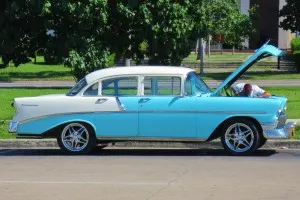
Vintage American cars are a means of earning an income in Cuba.
Some of the best maintained classic American automobiles in the world are still on the streets in Cuba. Everybody has seen the pictures. Chevys and Fords from the fifties in their original colors, buffed to a mirror shine, running on leaded gasoline imported from Venezuela. How do they manage to keep those old cars pristine in a country surrounded on all sides by salt water, and with no access to replacement parts?
Cuba a nation of shade tree mechanics. They make things work because they have no choice. Entrepreneurs manufacture their own replacement parts, which they sell in the
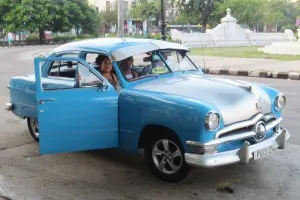
Vintage U.S. cars can be more valuable than a home.
underground economy. Some of them have figured out how to refit the old Detroit cars with engines from Russia and Korea, and China. Some of those old automobiles look like they just came off of the showroom floor. Others look like an American teenager’s auto shop project. They are all a work-in-progress by necessity.
The old cars are a status symbol. A means of earning income as taxis. Back in the bad old days when Cubans were forbidden to leave the country, some of them sealed their cars in plastic—I’m told—and tried to float them to Florida. Now Cubans are permitted to travel abroad if the country they want to visit will issue a visa. (Most of them won’t, because of the fear they won’t return.) The plastic wrapping option is still available if they want to take their cars with them.
I imagined the fifties museum pieces would be worth a fortune in the United States. “They would,” our guide told me, “But they’re worth more here.” In a country where
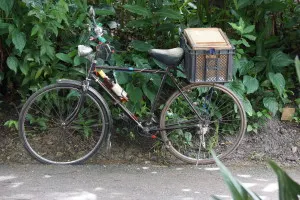
Delivery bike equipped with Cuban rum.
automobiles are a rarity, the U.S. classics cost more than a home.
There is no public transportation in Cuba other than taxis. There are the old classic taxis—of course—and in Havana there’s a fleet of tiny yellow cabs large enough to transport one or two passengers at most. There are also taxis powered by men on bicycles, and many that are pulled by horses.
It’s not uncommon to see men on horseback in Cuba—mostly young men, just as you’d imagine. If you’re desperate, you can buy a ride with one of them, but the most

Horses are still a major means of transportation.
popular means of long distance transportation is hitch hiking. People stand beside the road holding up Cuban pesos (CUP’s) to show a willingness to pay. One of our local guides had our tour bus drop her at a popular intersection where she could “catch a ride.” That surprised me, because tour guides are some of the highest paid workers in the country.
So what you are saying is that all used car salesmen should move to Cuba?
It’s amazing they can keep those cars running… that they actually have to make some of the parts to fix them.. but with limited options, man can and will be creative.. enjoying the tales with interest.. thanks
The Cuban people may have serious shortages of material things, but they have no shortage of imagination and creativity.