Getting Short Fiction Published

In 2005, the Pioneer Library System invited readers and writers from all over Oklahoma to attend the Red Dirt Book Festival. It was free, and it featured Oklahoma literary In-an-instantluminaries like Tim Tingle, Rilla Askew, Marcia Preston, Tim Tharp, and Bill Bernhardt.
As an additional incentive the festival invited attendees to submit short-short stories (no more than 2,000 words) to be evaluated for publication in the 2005 Red Dirt Anthology. I had written a 190,000 word novel (That one is still unpublished) so 2,000 words seemed like a walk in the park.

I wrote my first story ever for that publication—“Gypsy Ghosts and Nicknames”. It wasn’t very good but competition was minimal (About 75 submissions), and the anthology took it. I was hooked.

Short stories are a lot more fun to write than novels. You can turn them out faster. You can give up on them when it’s clear you should. Rewrites and revisions are relatively easy: you can add characters, switch points of view, change tense, even change the sex of your protagonist.  Anything is possible within twenty double-spaced type written pages.

My second and third short story publications came two years after my first. “Footprints,” and “Mystery Land” made it into 2007 Red Dirt Anthology. Those were better stories and made encore appearances in other magazines later on, but Red Dirt Book Festival rejected my submissions in 2009 and never conducted another event. My only market had dried up.

Where do you send a piece of short fiction once its finished? Agents don’t represent them. Small presses usually don’t want singles. Slick magazines like The New Yorker, and Vanity Fair aren’t interested unless you’re already famous.

I didn’t publish another story until Regina Williams (I met her at OWFI) accepted “Pure D Truth” for the Storyteller magazine’s 2011 second quarter issue. That was publication number four in a six-year period. Since that time I have had about 40 additional stories published and several more scheduled to come out this year.

My writing improved, but it didn’t improve that much. Many of those recently published stories were written during the long dry period from 2007 to 2011. The thing that changed my publication success rate more than anything else was a website I discovered, https://duotrope.com.

Duotrope was a free site when I first signed up. They tried to support themselves with contributions. I gave them what they asked, but not many people did so now the site costs five dollars a month—$50.00 a year if you’re willing to commit that long.

You can sign up for a 7 day free trial by going here: https://duotrope.com/index.aspx

Once you are a subscriber, a newsletter comes in the mail each week, It breaks down the current market into the following categories: paying market listings added, non-paying market listings added, markets opening or re-opening for submissions, markets closed for submissions.

 The paying market category looks like this:

Monkey Star Press: Adventures in Potty Training (themed antho)

Baen Books: Baen Fantasy Adventure Award

Booktagon

FireGoat Books

Words Magazine

If you find a market that interests you, click on it and you go to a page that tells you what the publication pays (if anything) and what it wants in terms of style and length. If you are still interested, a link on that page takes you to the publication website where you learn more details. You can often read examples of published stories and even submit right from that site.

 Duotrope currently tracks 5,003 markets, including fiction, non-fiction and poetry. They provide a search feature that allows authors to find markets that fit their individual needs. The Duotrope site offers submission and publication statistics including acceptance rates, response times, and types of responses (form vs. personal). Most weeks there are interviews with editors that provide insights into the selection process.

The site is good for novelists too. The Big Six don’t show up there unless they are seeking un-agented submission, but there are plenty of small houses, and publishers that specialize in e-books, short story collections, and novellas. My publisher, Pen-L Publishing is listed on the site. I pitched Owl Dreams to Duke Pennell at the 2012 OWFI conference rather than submitting blind. Personal contact is almost impossible for short fiction, but it’s still the best policy for placing novels.

 

Pen and Keyboard Writers / Edmond

Not tasty, but it's refreshing.
Not tasty, but it’s refreshing.

When I first tried my hand at writing fiction, I started with a novel. A lot of people make that mistake. I began with a compelling idea, and wrote about it until I ran out of things to say. When I stopped I had a 190,000 words that spent most of their time going nowhere.  I had spent not one minute learning the craft of writing. I’ve still got that novel. Every now and then I take it out and weigh it to remind myself how far a writer can go wrong before he tries something new.

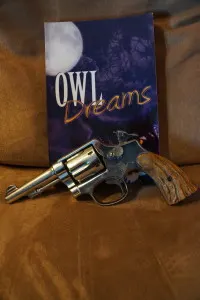
The Pistol That Nearly Killed MeWriter-agent-editor Terry Burns told me what I should do. He told a lot of people while he was lecturing a room full of would be writers at the annual OWFI conference. He said writers should perfect their skills on short fiction.

I had no idea how to write short fiction. But then come to think of it I had no idea how to write a novel either and short fiction had one compelling advantage over novels. They didn’t take so long to write.

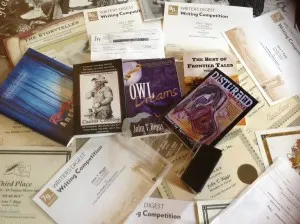
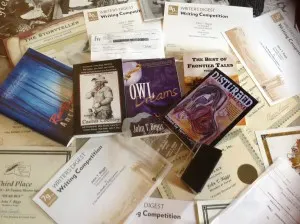
Ten years later I have 45 short stories published in a wide variety of magazines and anthologies. I’ve won some some pretty respectable prizes: Grand Prize 80th annual Writers Digest Competition, Third prize 2011 Lorian Hemingway contest, OWFI Creme de la Creme winner in 2012, Storyteller Magazine’s Peoples Choice Award.

I’ve published a free standing short collection of stories, Southwest Gothic Tales available free on smash words, a Max Avalon single, Messages and a Novel, Owl Dreams, which is based on a character developed in a series of short stories. Pen-L Publishing has two more of my novels in the editing process. They both started off as pieces of short fiction.

Thank you Terry Burns.

On Saturday, April 12, I’m speaking to the Pen and Keyboard Writers of Edmond about writing short fiction and short fiction contests. For those who can’t attend and those who lose their handout, I am going to list a number of useful links here.

Duotrope is a site that offers a weekly newsletter which keeps writers in touch with new markets, old markets that are opening and closing, and contests. If you only have one link at your disposal, this is the one it should be. In the last two years, I have had 40 short stories published  in magazines and anthologies. At least 30 of these have come from Duotrope. This is a subscription site, but it is well worth the $50 per year it costs.

Just a Contest, and Freelance Writers, are two contest sites that charge no money and offer a wide variety of links to contest websites. They are great for this purpose but if you are looking for markets for short fiction they are not the place to go.


Winning stories
Winning stories

Writers Digest and Lorian Hemingway  have well known and well respected contests. I’ve had good experiences with both these sites and actually received a personal letter from Lorian Hemingway.

Writers of the Future is a contest site where many science fiction and fantasy writers have gotten their start. The contest is free. You can enter stories up to 17,000 words long, but you must be an amateur writer.

OWFI offers an annual contest for its members. The cost is exceptionally low and the prizes are worthwhile. I’ve been a winner, a loser, and a judge in this contest. If you are a regional writer you should be a member.

Frontier Tales is an on line magazine of Western Fiction. If your story is published it automatically is eligible for a “The Best Of” contest. Winners in the past have been published in The Best of Frontier Tales anthologies. The site is operated by Duke Pennell, my publisher, and yes, one of my stories won a “Best of” contest.

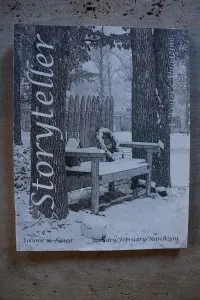
The Storyteller Magazine is a writers magazine that includes contests but is also a market. Regina Williams is the editor. I have to say she is the friendliest, most open editor I have ever met. She publishes the magazine quarterly, and each issue is loaded with 40 or more stories. Regina will give new writers a chance where many other editors will not.

The Storyteller Magazine

Storyteller Magazine

Storyteller Magazine

I met Regina Williams at the second OWFI conference I ever attended. I’d never heard of her and she had certainly never heard of me, but my good friends Bill and Pam Wetterman were shepherding speakers. Regina was one of them, and they introduced me to the first magazine editor I’d ever spoken with in person.

 She had a lot to say about writing, and the publishing business, and the future of short fiction in the literary scene, but the thing she said that I remember most clearly was this: “I try to be there for the writer.”

Up to that point I thought all editors could say was: “We enjoyed reading your submission but do not feel it is suitable for our publication. Thank you for your interest.”  So I guess you’d say I had my doubts.

I kept an eye on Regina for the rest of the day. I sat in on a group where she spoke about following editorial guidelines (among other things). I saw her accept a couple of poems from a Tulsa poet right on the spot. They both walked away from the encounter with hundred watt smiles, and not the kind from those environmentally safe light bulbs either. It looked to me like this magazine editor was “the real deal” so I decided to find out about her about her magazine.

 It’s called The Storyteller Magazine. If you look it up on Duotrope, you’ll find an Interview with the editor where she says the thing that sets her magazine apart from other publications is: “We try to get back to the authors in two weeks, rather than the months it takes for most publications.”


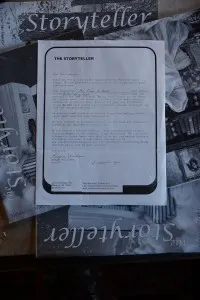
Storyteller Contract

Storyteller Contract

The Storyteller does reply to submissions promptly, but that’s really not the thing that sets the magazine apart. Regina Williams really is there for the writer. She’s one of us. She knows how heartbreaking it is to put your heart and soul into a piece of work and then have it rejected.

When I ask her what I should say about The Storyteller Magazine in this blog post she told me, “I want my magazine to be accessible to everyone, no matter their level of writing and I also want to be able to help those who had a good story, but just didn’t have anyone to tell them how to make it a great story.”

And she told me once again, “I want to be there for the writer.”

I no longer doubt the truth of that statement. I don’t know of another magazine that showcases writers at all stages of their careers, and does so with style. The Storyteller Magazine publishes poetry, essays, features, non-fiction, as well as short fiction (2,500 word max) of every genre except children’s stories and erotica. I picked an issue at random and counted 25 short stories, and 45 poems. That’s four to five times more than the average literary publication.

The origins of The Storyteller explain a lot. Regina’s mother had been writing for a magazine that closed its doors and she wanted another place to submit.

 “As you know,” Regina said, “there are very, very few magazines that would take the writings of an elderly lady about her life. She kept on at me until finally I told her I would do it, just to get her off my back!”

 The Storyteller has been in print now for eighteen years. It’s a great place for writers at all stages of their careers to submit work. It’s a great place to read stories too. Authors should never forget that part of the equation.

 I was weeding in the garden when my wife brought me an SASE I’d sent along with my first submission to The Storyteller. She said, “Looks like another rejection.” Easy to assume, so far that’s all that ever came in the mail. But this one wasn’t a rejection, it was an acceptance for a short story, “The Pure-D Truth”, which came out in vol. 16, issue 3 of the magazine. This was the first story I had published in a real magazine—not part of a conference with a limited submission base.

I’ve been subscribing ever since. Every short story writer, essayist, and poet should. There is no alternative publication that fills the niche of The Storyteller Magazine. We need to do everything we can to keep this writer’s magazine healthy.

 I guess it’s true; you never forget your first.

Useful Links

Not tasty, but it's refreshing.

Not tasty, but it’s refreshing.

On Saturday, Jan 11, I’m speaking to the Norman Galaxy of Writers about writing short fiction and short fiction contests. For those who can’t attend and those who lose their handout, I am going to list a number of useful links here.

Duotrope is a site that offers a weekly newsletter which keeps writers in touch with new markets, old markets that are opening and closing, and contests. If you only have one link at your disposal, this is the one it should be. In the last two years, I have had 40 short stories published  in magazines and anthologies. At least 30 of these have come from Duotrope. This is a subscription site, but it is well worth the $50 per year it costs.

Just a Contest, and Freelance Writers, are two contest sites that charge no money and offer a wide variety of links to contest websites. They are great for this purpose but if you are looking for markets for short fiction they are not the place to go.


Winning stories

Winning stories

Writers Digest and Lorian Hemingway  have well known and well respected contests. I’ve had good experiences with both these sites and actually received a personal letter from Lorian Hemingway.

Writers of the Future is a contest site where many science fiction and fantasy writers have gotten their start. The contest is free. You can enter stories up to 17,000 words long, but you must be an amateur writer.

OWFI offers an annual contest for its members. The cost is exceptionally low and the prizes are worthwhile. I’ve been a winner, a loser, and a judge in this contest. If you are a regional writer you should be a member.

Frontier Tales is an on line magazine of Western Fiction. If your story is published it automatically is eligible for a “The Best Of” contest. Winners in the past have been published in The Best of Frontier Tales anthologies. The site is operated by Duke Pennell, my publisher, and yes, one of my stories won a “Best of” contest.

The Storyteller Magazine is a writers magazine that includes contests but is also a market. Regina Williams is the editor. I have to say she is the friendliest, most open editor I have ever met. She publishes the magazine quarterly, and each issue is loaded with 40 or more stories. Regina will give new writers a chance where many other editors will not.