Storyteller Magazine
I met Regina Williams at the second OWFI conference I ever attended. I’d never heard of her and she had certainly never heard of me, but my good friends Bill and Pam Wetterman were shepherding speakers. Regina was one of them, and they introduced me to the first magazine editor I’d ever spoken with in person.
She had a lot to say about writing, and the publishing business, and the future of short fiction in the literary scene, but the thing she said that I remember most clearly was this: “I try to be there for the writer.”
Up to that point I thought all editors could say was: “We enjoyed reading your submission but do not feel it is suitable for our publication. Thank you for your interest.” So I guess you’d say I had my doubts.
I kept an eye on Regina for the rest of the day. I sat in on a group where she spoke about following editorial guidelines (among other things). I saw her accept a couple of poems from a Tulsa poet right on the spot. They both walked away from the encounter with hundred watt smiles, and not the kind from those environmentally safe light bulbs either. It looked to me like this magazine editor was “the real deal” so I decided to find out about her about her magazine.
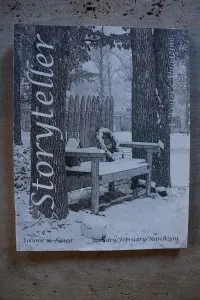
It’s called The Storyteller Magazine. If you look it up on Duotrope, you’ll find an Interview with the editor where she says the thing that sets her magazine apart from other publications is: “We try to get back to the authors in two weeks, rather than the months it takes for most publications.”
Storyteller Contract
The Storyteller does reply to submissions promptly, but that’s really not the thing that sets the magazine apart. Regina Williams really is there for the writer. She’s one of us. She knows how heartbreaking it is to put your heart and soul into a piece of work and then have it rejected.
When I ask her what I should say about The Storyteller Magazine in this blog post she told me, “I want my magazine to be accessible to everyone, no matter their level of writing and I also want to be able to help those who had a good story, but just didn’t have anyone to tell them how to make it a great story.”
And she told me once again, “I want to be there for the writer.”
I no longer doubt the truth of that statement. I don’t know of another magazine that showcases writers at all stages of their careers, and does so with style. The Storyteller Magazine publishes poetry, essays, features, non-fiction, as well as short fiction (2,500 word max) of every genre except children’s stories and erotica. I picked an issue at random and counted 25 short stories, and 45 poems. That’s four to five times more than the average literary publication.
The origins of The Storyteller explain a lot. Regina’s mother had been writing for a magazine that closed its doors and she wanted another place to submit.
“As you know,” Regina said, “there are very, very few magazines that would take the writings of an elderly lady about her life. She kept on at me until finally I told her I would do it, just to get her off my back!”
The Storyteller has been in print now for eighteen years. It’s a great place for writers at all stages of their careers to submit work. It’s a great place to read stories too. Authors should never forget that part of the equation.
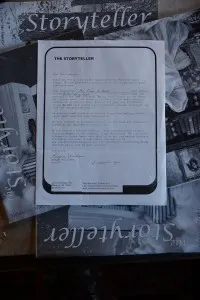
I was weeding in the garden when my wife brought me an SASE I’d sent along with my first submission to The Storyteller. She said, “Looks like another rejection.” Easy to assume, so far that’s all that ever came in the mail. But this one wasn’t a rejection, it was an acceptance for a short story, “The Pure-D Truth”, which came out in vol. 16, issue 3 of the magazine. This was the first story I had published in a real magazine—not part of a conference with a limited submission base.
I’ve been subscribing ever since. Every short story writer, essayist, and poet should. There is no alternative publication that fills the niche of The Storyteller Magazine. We need to do everything we can to keep this writer’s magazine healthy.
I guess it’s true; you never forget your first.