
The London Bobbies

The Horses and the Guards sit in a Zen-like trance.

The Horses and the Guards sit in a Zen-like trance.

There are plenty of police procedural and spy novels that include exploits of the British police, but when you see them on the street, they fit more appropriately into the speculative fiction genre. The police in London seem to live in two parallel universes.

There are the Guards, in their brightly colored uniforms with spiked helmets or tall bearskin (no kidding) hats. They are armed with swords and rifles; some of them sit on the backs of thoroughbreds so still they appear to be frozen in time.

The Guards assume Zen-like trances and stayed that way until the next shift of equally entranced replacements take up their posts in a mechanical,

Bear Skin Hats and rifles.

Bear Skin Hats and rifles.

slow motion ceremony. It looks as if they are under a magic spell. It’s too late for me to work guards like these into Owl Dreams—more’s the pity—but maybe I’ll put them in a future novel somewhere down the line.

 The policemen who take care of law enforcement in the material world are the Bobbies. They walk the streets of London armed with nothing more than nightsticks, stern looks, and jokes that fit every occasion. Bobbies wear blue uniforms (not unusual around the world but they started the tradition almost 200 years ago). They also wear “custodial helmets” left over from the 19th century.

 

Armed mostly with stern looks and jokes

Armed mostly with stern looks and jokes

The Bobbies are a pedestrian police presence the way old-time beat cops used to be in American cities. Of course there are Bobbies in police cars too. There are even a few on bicycles and horses. Those funny looking, phenomenally effective London cops are everywhere people gather. They have been a fixture in the British capitol since the first ones hit the streets in 1829.

The London police got their name from their founder, Robert Peel. In 1822, while he was Home Secretary, Peel proposed that the House of Commons form a committee to investigate the potential policing of London.
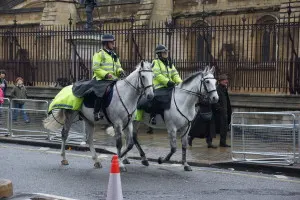
 

When they ride horses, the "custodial helmet" is replaced by something safer.

When they ride horses, the “custodial helmet” is replaced by something safer.

The citizenry—and members of the House of Commons—were understandably unenthusiastic. During the reign of Charles II, London had the “Charlies”. That police force operated at the pleasure of the aristocracy, which didn’t please the common man at all. The “Charlies” were replaced by the Bow Street Runners in 1749, administered for a while by Henry Fielding, author of Tom Jones. The Bow Street Runners were better than the “Charlies”, but both police forces were intrusive in the private lives of citizens and were feared more than respected.

The public’s experience with London police was so bad that Robert Peel’s committee initially concluded that an effective system of policing could not be reconciled with a free society. To counteract this attitude Peel developed a standard of morals and behavior for the Bobbies known as the Peelian Principals. Using these principals he organized the London Metropolitan Police Force It was administered then, as it is today, from Scotland Yard.

 The first 1,000 Bobbies wore blue tailcoats (as opposed to the traditional military red) and top hats to more closely resemble the “common man”. Each was issued a wooden truncheon carried in a long pocket in the tail of their coats, a pair of handcuffs, and a wooden rattle to raise the alarm. By the 1880s the rattle had been replaced by a whistle.
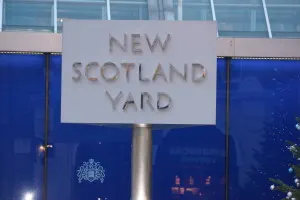
 

New Scotland Yard

New Scotland Yard

Peele’s Bobbies had to be six feet tall (or as near as possible) and have no criminal history. They worked seven days a week for the grand sum of £4 per month. They wore their uniforms even when off duty to allay the public’s fear of spying. They were required to seek official permission to get married or even to share a meal with a civilian.

Scotland Yard is now world famous for its investigative work, but Robert Peel’s original Metropolitan Police Force were forbidden to investigate crimes. The Bobbies were there to enforce laws and pursue perpetrators only when warrants had been issued or when crimes were committed in their presence. The Bobbies weren’t even permitted to ask the victim of a crime who he thought might have done it.

 If investigative work was needed, citizens could employ detectives from the private sector. This situation may have given rise to Alfred Conan Doyle’s fictional super-sleuth Sherlock Holmes. Not quite in the speculative fiction genre, but close enough.
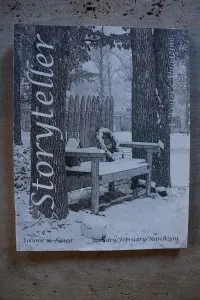
The Storyteller Magazine

Storyteller Magazine

Storyteller Magazine

I met Regina Williams at the second OWFI conference I ever attended. I’d never heard of her and she had certainly never heard of me, but my good friends Bill and Pam Wetterman were shepherding speakers. Regina was one of them, and they introduced me to the first magazine editor I’d ever spoken with in person.

 She had a lot to say about writing, and the publishing business, and the future of short fiction in the literary scene, but the thing she said that I remember most clearly was this: “I try to be there for the writer.”

Up to that point I thought all editors could say was: “We enjoyed reading your submission but do not feel it is suitable for our publication. Thank you for your interest.”  So I guess you’d say I had my doubts.

I kept an eye on Regina for the rest of the day. I sat in on a group where she spoke about following editorial guidelines (among other things). I saw her accept a couple of poems from a Tulsa poet right on the spot. They both walked away from the encounter with hundred watt smiles, and not the kind from those environmentally safe light bulbs either. It looked to me like this magazine editor was “the real deal” so I decided to find out about her about her magazine.

 It’s called The Storyteller Magazine. If you look it up on Duotrope, you’ll find an Interview with the editor where she says the thing that sets her magazine apart from other publications is: “We try to get back to the authors in two weeks, rather than the months it takes for most publications.”


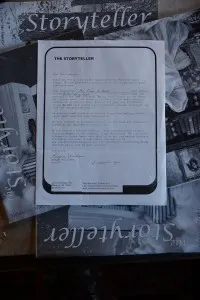
Storyteller Contract

Storyteller Contract

The Storyteller does reply to submissions promptly, but that’s really not the thing that sets the magazine apart. Regina Williams really is there for the writer. She’s one of us. She knows how heartbreaking it is to put your heart and soul into a piece of work and then have it rejected.

When I ask her what I should say about The Storyteller Magazine in this blog post she told me, “I want my magazine to be accessible to everyone, no matter their level of writing and I also want to be able to help those who had a good story, but just didn’t have anyone to tell them how to make it a great story.”

And she told me once again, “I want to be there for the writer.”

I no longer doubt the truth of that statement. I don’t know of another magazine that showcases writers at all stages of their careers, and does so with style. The Storyteller Magazine publishes poetry, essays, features, non-fiction, as well as short fiction (2,500 word max) of every genre except children’s stories and erotica. I picked an issue at random and counted 25 short stories, and 45 poems. That’s four to five times more than the average literary publication.

The origins of The Storyteller explain a lot. Regina’s mother had been writing for a magazine that closed its doors and she wanted another place to submit.

 “As you know,” Regina said, “there are very, very few magazines that would take the writings of an elderly lady about her life. She kept on at me until finally I told her I would do it, just to get her off my back!”

 The Storyteller has been in print now for eighteen years. It’s a great place for writers at all stages of their careers to submit work. It’s a great place to read stories too. Authors should never forget that part of the equation.

 I was weeding in the garden when my wife brought me an SASE I’d sent along with my first submission to The Storyteller. She said, “Looks like another rejection.” Easy to assume, so far that’s all that ever came in the mail. But this one wasn’t a rejection, it was an acceptance for a short story, “The Pure-D Truth”, which came out in vol. 16, issue 3 of the magazine. This was the first story I had published in a real magazine—not part of a conference with a limited submission base.

I’ve been subscribing ever since. Every short story writer, essayist, and poet should. There is no alternative publication that fills the niche of The Storyteller Magazine. We need to do everything we can to keep this writer’s magazine healthy.

 I guess it’s true; you never forget your first.

Free is Good–Right?

Will Write for Reviews

Will Write for Reviews

My publisher told me to “Beg, Borrow, or Steal” twenty Amazon Reviews for Owl Dreams. I thought it would be best to start off with begging.

I’ll throw in a little bribery to make it interesting. I’ll buy the books (or the Kindle downloads if you prefer) for the first ten people who click on the Contact John tab on the right hand side of this page and send me an email promising to review Owl Dreams.

If you’ve been meaning to order Owl Dreams, but haven’t gotten around to it yet, now’s your chance to get it free. I promise you’ll like it–and if you don’t . . . Well, there’s always the review.

Of course Southwest Gothic Tales, is always free on Smashwords, and you can buy Owl Dreams in book or Kindle format here, if you’d rather.

Want to be a TV Star? Visit London

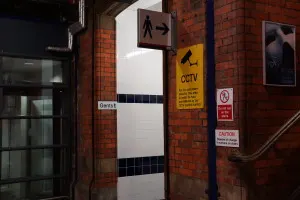
Camera Warning Outside Men's restroom

Camera Warning Outside Men’s restroom

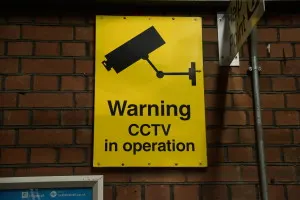
The first time I went inside a public restroom with a sign outside the door that said, “Warning CCTV in operation,” I kind of lost the urge. Surveillance warnings didn’t come as a complete surprise. I’d watched Masterpiece Mystery!, on U.S. public television. I knew CCTV cameras were common in the UK, but until I visited London a couple of weeks ago, I never realized how prevalent they were.

CCTV stands for closed circuit television in case you haven’t heard. The first system was engineered and installed by Siemens AG at Test Stand VII in Peenemünde, Germany in 1942 for observing the launch of V-2 rockets. I doubt the Germans envisioned the technology for storing videos for the police to view days or even weeks after an incident occurred. George Orwell was British after all.

Every Public Place is monitored

Every Public Place is monitored

Those cameras are everywhere in the United Kingdom. One count puts their number at 1.85 million. That’s about one for every thirty-two people in the country. There are private cameras too—just like in the United States—in banks, restaurants, and shops. The United Kingdom has become a geopolitical version of Las Vegas, only the surveillance doesn’t begin and end at casino doors. It follows visitors and citizens in streets and on the Underground.

 There are mounted cameras at intersections that record automobile traffic and others

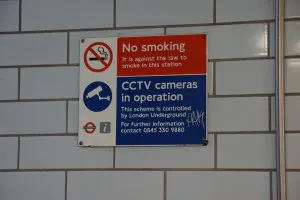
CCTV in the Underground

CCTV in the Underground

that document the movement of pedestrians. Video appearances are unavoidable. The average U.K. citizen passes 70 public cameras over the course of the day, and God knows how many private ones. The devices don’t pick up sound, so far, but British law enforcement hires lip readers to help get them over that technological hump.

 If you commit a crime in a public place in England, the police will obtain the video files and watch you in the act. CCTV images are better than eyewitnesses at a trial, and the cameras are positioned so a criminal can be followed from the scene to wherever he went afterward.

CCTV Warning Sign

CCTV Warning Sign

It’s not a perfect system, but it’s had a drastic impact. Since CCTV has been universally installed, crimes in parking lots have been reduced by 51%, crimes in public transportation areas have been dropped by 23%, and over the overall crime rate in public areas has decreased by 7%. As you might imagine, crimes against property are reduced substantially more than crimes against people. I couldn’t find any crime statistics dealing specifically with public restrooms, but they’ve probably gone down too.

 Once a crime has been committed, the police are less successful using CCTV to catch the offender. Only 1% to 3% of crimes are actually solved using the technology, but in large metropolitan areas that is still a significant number, and the prevention aspect of surveillance is undeniable.

CCTV in Train Station

CCTV in Train Station

 The British Criminal Justice System devotes 20% of its budget to the technology, so their commitment is not in doubt. So far there have been no nationwide scandals or abuses and the cameras have become ordinary fixtures on the street, as easy to ignore as trash receptacles. Locals don’t seem to pay attention the CCTV cameras and warning signs anymore, but if you visit London, they will definitely catch your eye.


Useful Links

Not tasty, but it's refreshing.

Not tasty, but it’s refreshing.

On Saturday, Jan 11, I’m speaking to the Norman Galaxy of Writers about writing short fiction and short fiction contests. For those who can’t attend and those who lose their handout, I am going to list a number of useful links here.

Duotrope is a site that offers a weekly newsletter which keeps writers in touch with new markets, old markets that are opening and closing, and contests. If you only have one link at your disposal, this is the one it should be. In the last two years, I have had 40 short stories published  in magazines and anthologies. At least 30 of these have come from Duotrope. This is a subscription site, but it is well worth the $50 per year it costs.

Just a Contest, and Freelance Writers, are two contest sites that charge no money and offer a wide variety of links to contest websites. They are great for this purpose but if you are looking for markets for short fiction they are not the place to go.


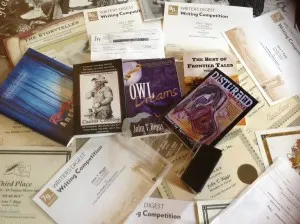
Winning stories

Winning stories

Writers Digest and Lorian Hemingway  have well known and well respected contests. I’ve had good experiences with both these sites and actually received a personal letter from Lorian Hemingway.

Writers of the Future is a contest site where many science fiction and fantasy writers have gotten their start. The contest is free. You can enter stories up to 17,000 words long, but you must be an amateur writer.

OWFI offers an annual contest for its members. The cost is exceptionally low and the prizes are worthwhile. I’ve been a winner, a loser, and a judge in this contest. If you are a regional writer you should be a member.

Frontier Tales is an on line magazine of Western Fiction. If your story is published it automatically is eligible for a “The Best Of” contest. Winners in the past have been published in The Best of Frontier Tales anthologies. The site is operated by Duke Pennell, my publisher, and yes, one of my stories won a “Best of” contest.

The Storyteller Magazine is a writers magazine that includes contests but is also a market. Regina Williams is the editor. I have to say she is the friendliest, most open editor I have ever met. She publishes the magazine quarterly, and each issue is loaded with 40 or more stories. Regina will give new writers a chance where many other editors will not.

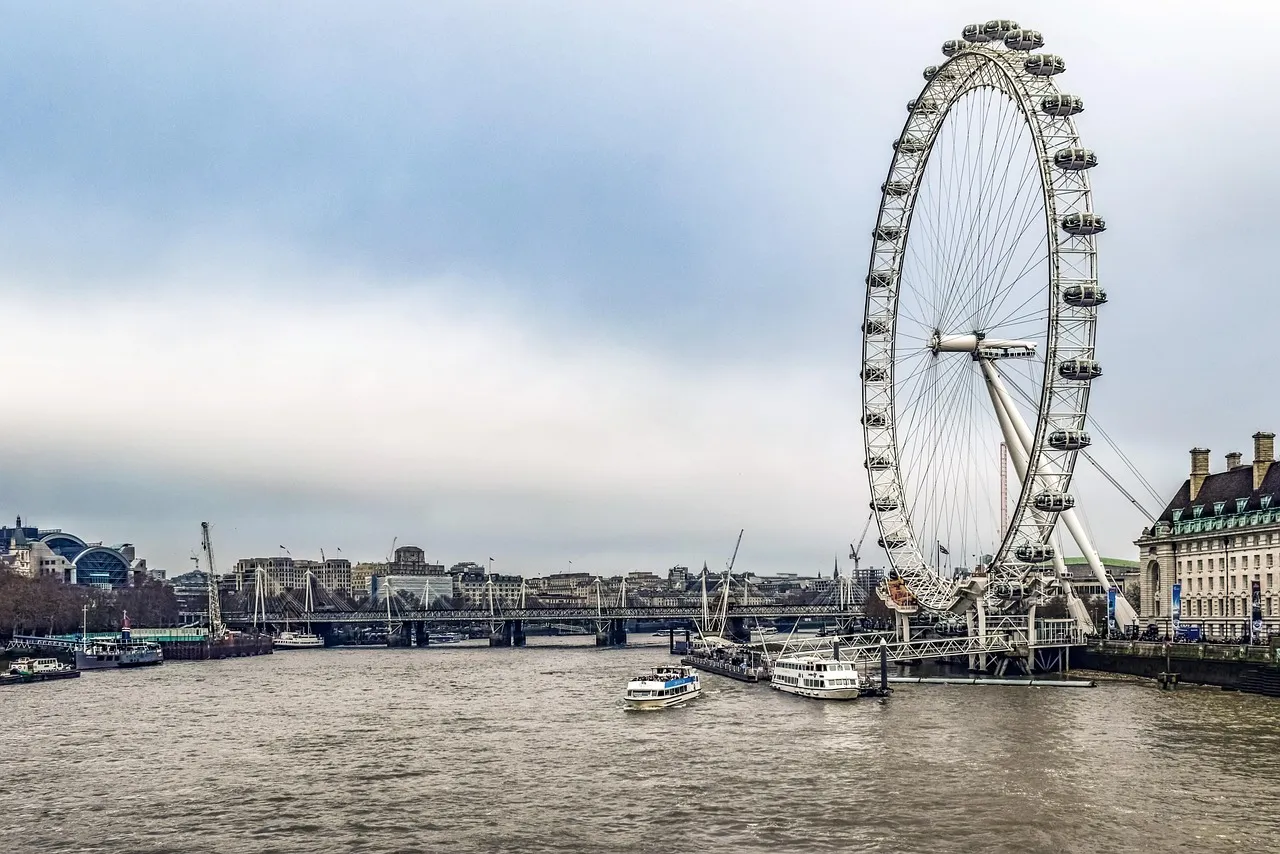
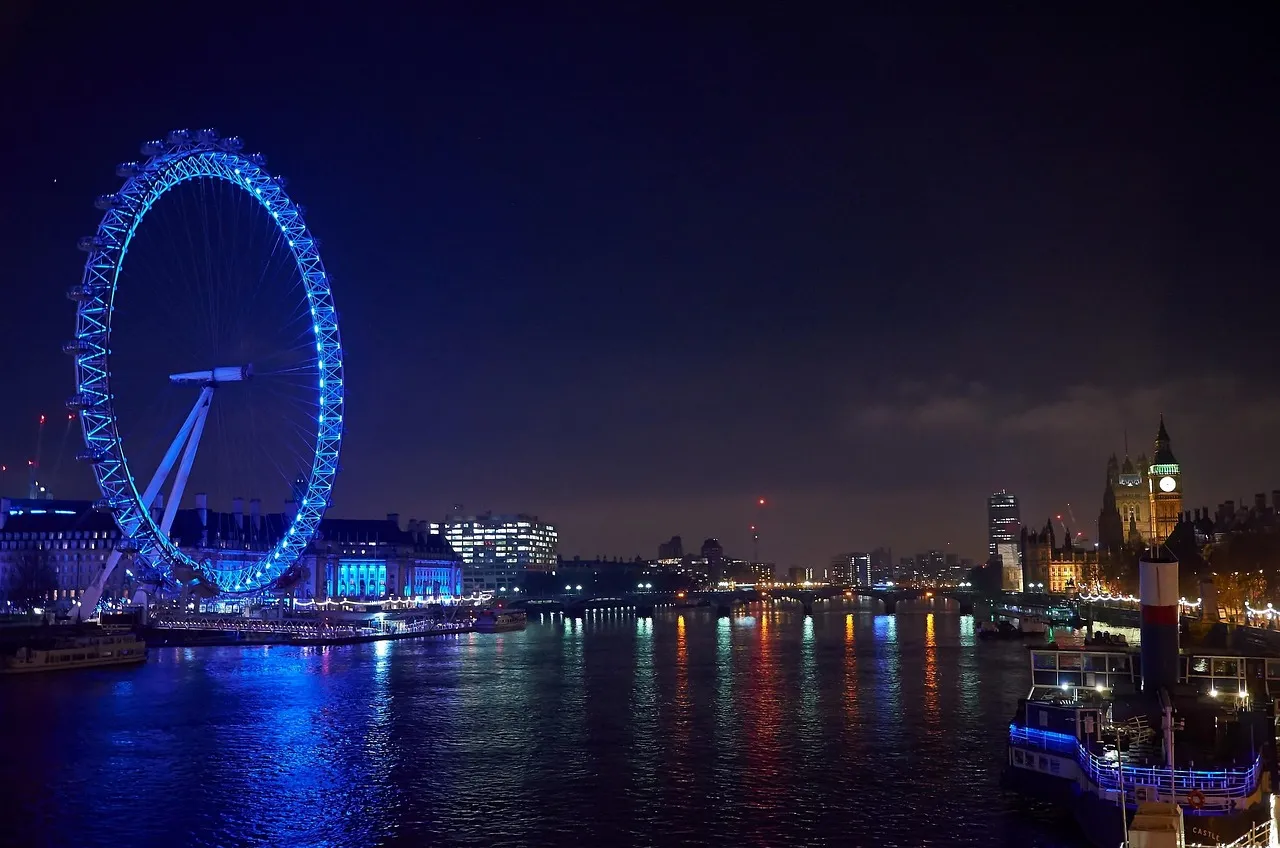
The London Eye

It may not be the tallest Ferris Wheel but it feels like it when you are at the top.

It may not be the tallest Ferris Wheel but it feels like it when you are at the top.

The London Eye may not be the biggest Ferris wheel in the world, but it sure feels that way when you are at the top. You can look down on Big Ben, and the Parliament Building, and Westminster Abby, and St. Paul’s as well as the River Thames.  On a clear day you can see 35 miles of the breathtakingly beautiful city of London spreading out around you in all directions.

 I’m usually pretty quick with a description, but all I could say was, “Wow.” I heard lots of one-word exclamations in many

View from the top.

View from the top.

different languages, because from what I could see, the only English spoken on the London Eye is spoken by American Tourists. The British sell tickets and move the passengers along (surprisingly efficiently) but apparently they don’t ride the tallest Ferris wheel in Europe.

 The Eye attracts 3.5 million visitors annually and is now the most popular tourist attraction in the United Kingdom. It was built to celebrate the new Millennium and to give England an architectural feature that would be as identifiable as the

Each London Eye Capsule holds 25 passengers.

Each London Eye Capsule holds 25 passengers.

Eifel Tower.  It looks more like a bicycle wheel than an eye, but that description isn’t nearly romantic enough to describe a structure that dominates the London landscape.

For six years, the London Eye was the tallest Ferris wheel in the world (443 feet tall with a diameter of 394 feet) until it was bypassed first by the Star of Nanchang and then by the Singapore Flyer. It was officially opened by British Prime minister Tony Blair on December 31, 1999, but wasn’t actually put into use until March of that year.

 The London Eye wasn’t the first giant Ferris wheel to be built in London. The Great

London Eye-View

London Eye-View

Wheel was built in Earls Court for the Empire of India Exhibition and opened to the public in 1895. That wheel was modeled (even more than the London Eye) on the original Ferris wheel built for the ’s Columbian Exposition in Chicago.

It cost fifty cents for a twenty-minute ride on the Chicago Wheel. A thirty-minute trip around the Eye with 24 other passengers will cost you £29.50. You’ll ride inside a sealed air conditioned capsule. Seating is available or you can walk around if you want to—and you’ll want to.

Don’t miss it if you are in London.